
A customer checked her doorbell camera. What she saw made 32,000 strangers open their wallets.
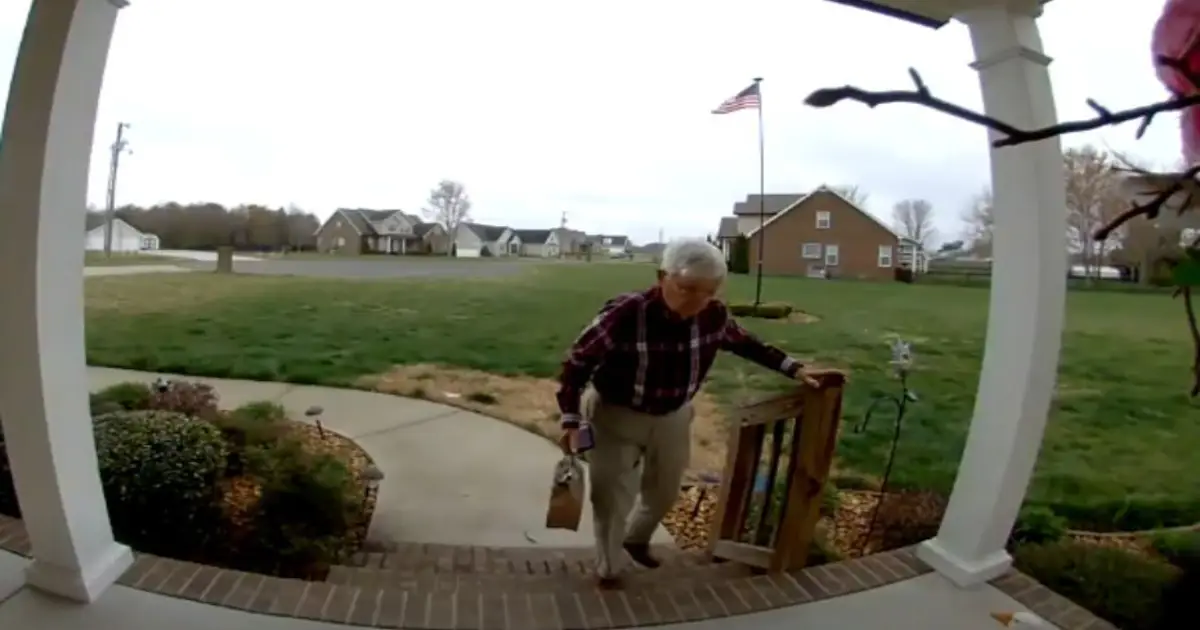
Brittany Smith almost never checks her doorbell camera.
On March 10, in Manchester, Tennessee, her ex-husband ordered a Starbucks for their daughter through DoorDash. He is a quadriplegic, so he selected the “leave at door” option. Nobody answered. Nobody had to.
Later that day, Smith pulled up the Ring footage. She saw an elderly man, moving slowly, gripping the handrail with one hand and holding a delivery bag with the other. He climbed the porch steps carefully, set the bag down, and walked away.
She called her ex-husband. “I don’t know what kind of tip you left this man,” she said, “but it better have been a good one.”
She sent him the video. His response: “Oh my God.”
“Help me find this precious man”
Smith posted the clip on Facebook with a simple plea: “Help me find this precious man! Why is he having to DoorDash? His name is Richard! Help me find him.”
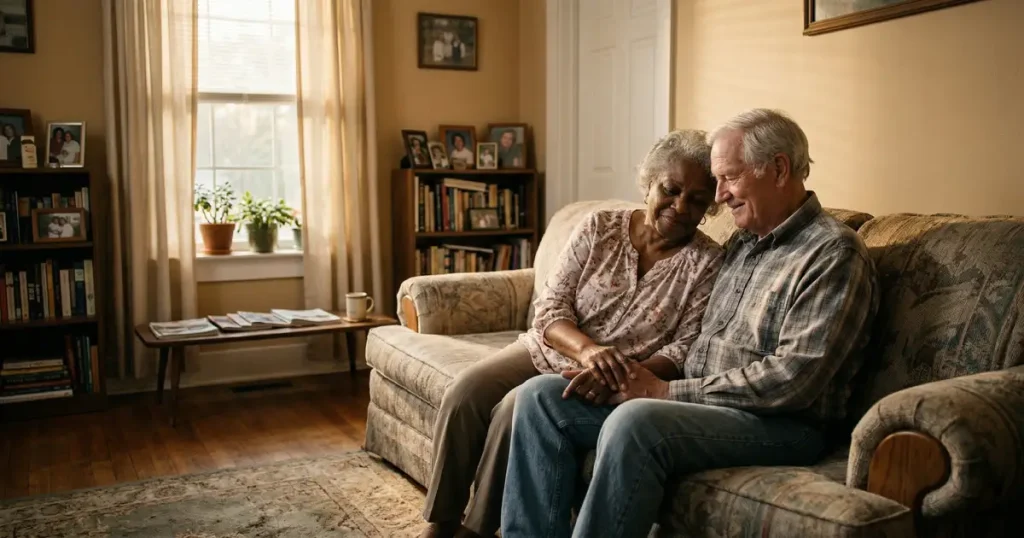
Within hours, someone recognized him. His name was Richard Pulley. He was 78 years old. He lived nearby with his wife Brenda. They had been married for 56 years.
Smith drove to see him. She brought $200 in cash as a tip. But once she sat down with the Pulleys, she realized the tip was not going to be enough.
6,000 deliveries and counting
Richard Pulley had already retired once. He sold insurance for decades and stopped working 13 years ago. That was supposed to be the end.
Then Brenda lost her job. She was let go from an insurance company through no fault of her own. Suddenly, the couple was living on Social Security alone.
“With just one income in the family, you have to push,” Richard told WSMV. “I needed to supplement our income, so I started working through DoorDash.”
He was not doing a few deliveries a week. He was driving full-time. Sometimes 12-hour days. He had completed nearly 6,000 deliveries. Brenda rode along when she could, keeping him company on the road.
After rent, utilities, and medication, there was nothing left. “Sometimes you just look at all the things that you need to pay,” Brenda told reporters, “because if you don’t, you’re going to end up in the hospital with something even more expensive.”
“When you’re past your mid-70s,” she added, “there’s not exactly a line of people waiting to hire you.”
“It’ll be what it’ll be”
Back at home, Smith’s phone was blowing up. Hundreds of messages. Then thousands. All saying the same thing: we want to help. Set up a GoFundMe.
So she did. She called it “Give Richard a Chance to Rest Again.” She set the initial goal at $20,000.
“I just started it and posted it and was like, ‘It’ll be what it’ll be,'” she later told TODAY.
The campaign passed $20,000 in hours. Then $100,000. Then $500,000. Within five days, more than 32,000 people had donated a combined $957,000.
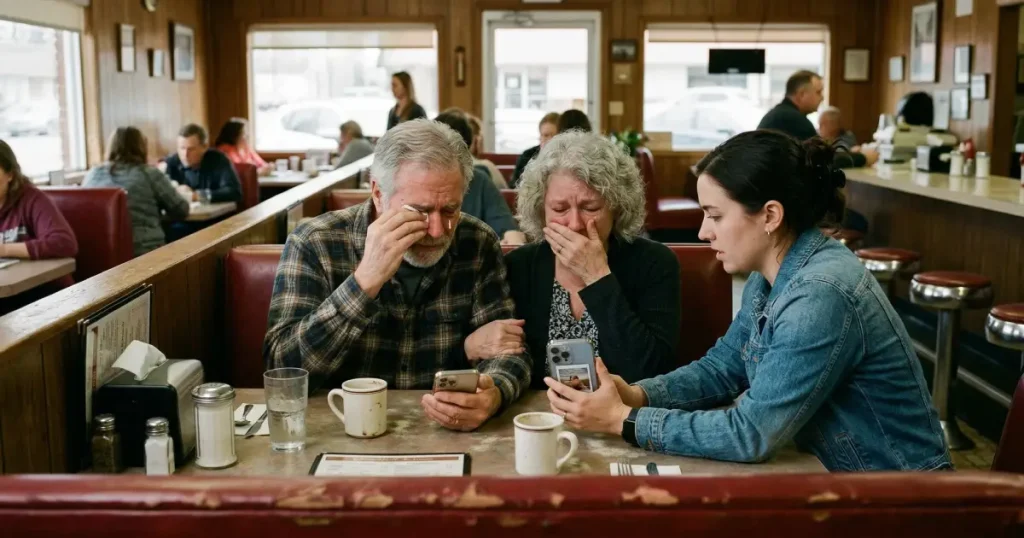
Smith brought the Pulleys to a local restaurant to tell them the total. The moment she showed them the number, Brenda’s hand went to her mouth. Richard went quiet.
“It’s just really difficult to believe that there’s that many people that are that generous to try to help us,” Richard said. “People that don’t even know us.”
DoorDash called him personally
The story did not stop at strangers. DoorDash’s CEO, Tony Xu, personally reached out to Richard to thank him for his nearly 6,000 deliveries.
The company added $20,000 to the GoFundMe and sent a gift to Brittany Smith for starting the chain reaction.
“Richard’s dedication to supporting himself and his wife is truly inspiring,” DoorDash said in a statement. “It’s a powerful reminder of how dashing can bring communities together.”
He is not retiring
Here is the part nobody expected.
After nearly a million dollars in donations, Richard Pulley says he is not stopping.
“They’ve set my wife and I up so that we can live a more comfortable life,” he said. “But after a week or two of this and it cools down, we’ll get back to work because I feel good being useful.”
DoorDash confirmed it: “Even with the new nest egg, Richard told us he plans to keep dashing as long as he can because it keeps him active and he enjoys it.”
The campaign was called “Give Richard a Chance to Rest Again.” But Richard does not want to rest. He wants to keep showing up.
At 78, with 6,000 deliveries behind him and a community of 32,000 strangers behind that, he still plans to climb the next set of porch steps.
What this story tells us about how giving works now
Ten years ago, this story would not have been possible. Not because people were less generous, but because the infrastructure did not exist.
A doorbell camera captured a moment. Social media amplified it. A crowdfunding platform collected the response. And 32,000 people, most of whom will never meet Richard Pulley, turned empathy into action in less than a week.
This is what modern giving looks like. It is fast. It is personal. It is powered by platforms that let anyone become a fundraiser and anyone become a donor, without paperwork, without committees, without galas.
In Canada, platforms like Tiing are built on the same principle: make it effortless for communities to rally around a person or cause. A link, a story, and a few taps on a phone. That is all it takes to turn a moment of empathy into something real.
Brittany Smith was not a professional fundraiser. She was a customer who checked her doorbell camera. And that was enough.
