
30 bake sale ideas for fundraising that sell out fast
Key takeaways
- A bake sale is still the highest margin fundraiser a small group can run, because the ingredients are donated and almost everything you collect is profit.
- A one day sale at a school or community centre usually raises $400 to $800, and a sale attached to a tournament or a holiday market can pass $3,000.
- Sell individually bagged single portions at round prices instead of whole cakes by the slice.
- Give people a way to pay without cash. On the same table that is the difference between $600 and $900.
- A Tiing page takes minutes to set up, works in Canadian dollars and keeps presales, donations and day of payments in one place.
Your group needs a specific amount of money by a specific date. The Grade 6 trip, the team jerseys, the camp fees, the new instruments. And the one fundraiser everybody can actually pull off is a bake sale. Everyone can make muffins, nobody needs a complicated permit, and the table goes up in a morning.
Then the same thing happens every year. Twelve people bring brownies and nobody brings anything savoury. No one knows what to charge, so somebody writes “by donation” on a piece of bristol board and the box fills with quarters. The cash box runs out of change by 10:30. Three families say they have no cash and walk away empty handed. By noon half the table is still there, and nobody wants to work out how many volunteer hours produced $280.
Groups that actually raise money get three decisions right, and none of them are about baking: what to sell, what to charge and how to take payment. Everything else is just cooking. Those three decisions explain the gap between a $300 table and a $1,200 table run by the same number of volunteers.
Here are 30 bake sale ideas grouped by the kind of group running the sale, with the effort involved and what each one brings in, in Canadian dollars. If you want formats beyond baking, our list of fundraising ideas covers the rest.
Why a bake sale is still the highest margin fundraiser
High margin because the ingredients are donated
In most fundraising formats you pay for the hall, the catering, the ticketing and sometimes the insurance before you collect a single dollar. At a bake sale, volunteers cover the flour, the butter and the chocolate out of their own groceries. The real cost to the organization sits around 5 % of what you raise, against 30 % to 50 % for a sit down dinner. Dollar for dollar, nothing else comes close. Our guide to what is fundraising puts the numbers side by side.
An event you can set up in one weekend
There is no venue to book six months out, no contract, no floor plan. You pick a date, open a sign up sheet and claim a corner of a hallway or a table at the community centre. Five people can run a sale ten days from now. That is also why the format suits groups that have never organized anything: mistakes are cheap and the learning is fast.
What a bake sale actually raises in Canadian dollars
A Friday afternoon table at a school pickup usually brings in $400 to $800. The same sale set up at the entrance of a shopping centre for a full weekend, with real foot traffic, gets to $1,500 without much trouble. A sale attached to a tournament, a spring concert or a holiday market often passes $3,000, because the crowd is already there and already spending.
| Sale format | Effort | Average return | Best for |
| School table, half a day | Low | $400 to $800 | Parent councils, daycares |
| Sale attached to an event | Medium | $1,000 to $3,000 | Sports teams, concerts |
| Shopping centre booth | Medium | $800 to $1,500 | Charities with volunteers |
| Online presale, single pickup | Low | $600 to $2,000 | Groups with a good contact list |
| Monthly treat subscription | High | $1,200 to $4,000 | Active clubs and associations |
| Cake auction or bake off | Medium | $700 to $2,500 | Tight knit communities |
These are typical ranges seen across Canada for groups of fewer than fifteen volunteers. They depend far more on foot traffic and contact list size than on the recipes.
Ready to take payment without cash?
→ Start your fundraiser
What to sell at a bake sale
The best bake sale items are the ones people can eat standing up, with no plate and no fork: chocolate chip cookies, lemon bars, brownies, muffins and cupcakes. Bag every portion individually, price in round dollars and keep three gluten free options on the table.
- Chocolate chip cookies: the first thing to go at almost every sale.
- Brownies cut into squares: the highest margin on the table, under $0.40 a portion.
- Lemon bars: what the adults buy, and usually the first to run out.
- Muffins: sell them in the morning and you catch everyone who skipped breakfast.
- Frosted cupcakes: the most photogenic item, which makes them the easiest to promote.
The recipes that sell out first
On a bake sale table the order of disappearance barely changes: cookies, brownies, bars, cupcakes, then whole cakes. The winners are the ones everybody recognizes. Butter tarts, Nanaimo bars, date squares, banana bread, carrot cake with cream cheese frosting and rice krispie treats go before any original creation. Save the creative thinking for the display, not the recipe.
Individual portions that are easy to package
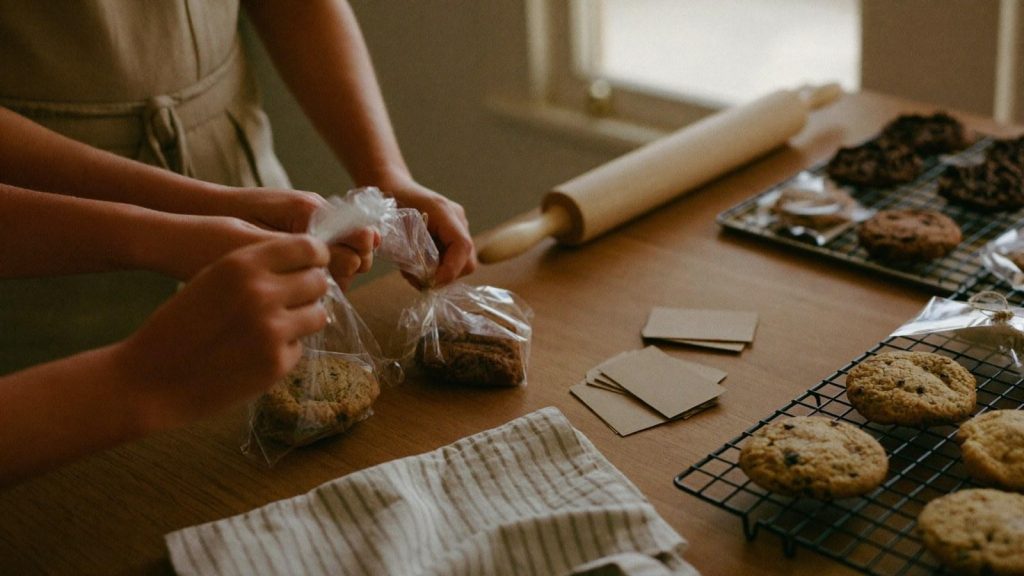
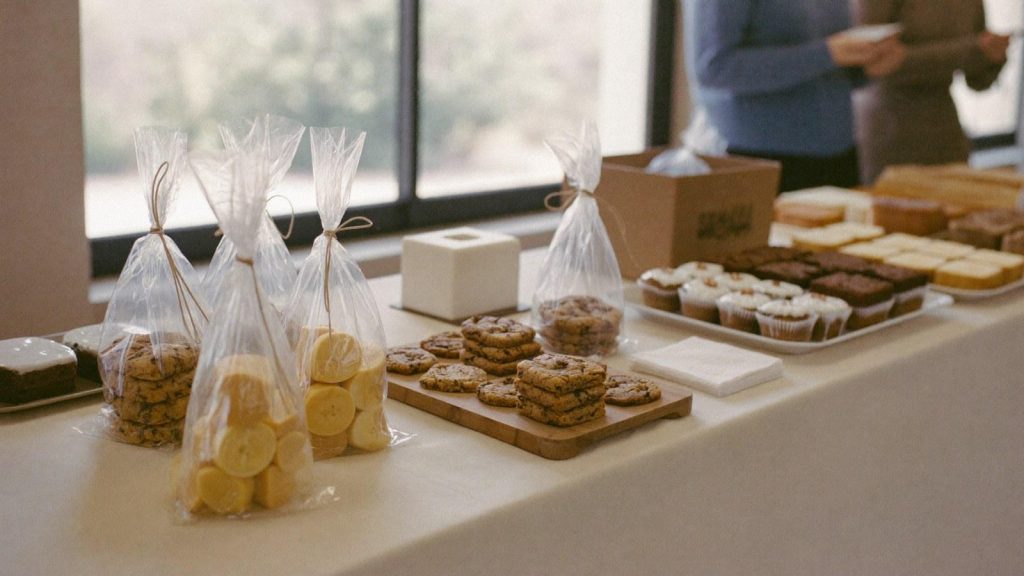
A whole cake sold by the slice ties up a volunteer who has to cut, serve and handle money at the same time. A pre bagged portion is picked up and paid for in five seconds. Bag everything individually in clear cellophane tied with twine, and add a tag with the item name and the allergens. Cake bites, cookie cups, cookie bars and candy boxes are built for this format.
Easy recipes with simple ingredients
The recipes that travel best through a group of volunteers use simple ingredients and forgive small mistakes: brownies from scratch, oatmeal raisin cookies, granola bars, loaf cakes, sugar cookies. Avoid anything with whipped cream, fresh cheese or custard. It has to survive four hours on a table at room temperature, which rules out most of what looks impressive online.
Gluten free, nut free and vegan options
Three gluten free items and two nut free items are enough to avoid turning anyone away. In a school it is effectively mandatory, since most Canadian boards ban peanuts and tree nuts on site. Use a separate table, or at minimum a clearly labelled tray, and write the full ingredient list on the tag. One badly filled out label can cost you a family‘s trust for three years.
Seasonal and themed treats
A theme raises the price people accept without raising your cost. September: pumpkin spice muffins and maple cookies. October: decorated cupcakes for Halloween. December: boxes of twelve christmas cookies, the single most profitable format of the year. February: iced sugar cookies. Spring: rhubarb pie and lemon squares. Every holiday gives you a reason to go back to your list.
30 bake sale ideas by type of group
Ideas for a school or daycare bake sale
- Friday afternoon table at pickup, the easiest format to repeat every month.
- Morning snack booth on the first day back, while parents are still in the yard.
- Class against class with a posted leaderboard, the winning class picks the year end activity.
- Surprise lunch box sold by presale to parents, packed by the older students.
- Bake off between teachers, students vote by buying $1 bites.
- Student decorated cookies sold during arts week.
- Coffee and muffins for parents during report card interviews.
Ideas for a registered charity or nonprofit
- Treat table at the annual general meeting with a live fundraising total on display.
- Sale attached to an existing campaign, such as a food drive or a holiday hamper.
- Boxes of twelve holiday cookies sold by presale and delivered on one day.
- Cake auction: local businesses sponsor a cake, supporters bid on your donation page.
- Community hall sale paired with a garage sale or a craft table.
- Treats offered as a thank you above a set online donation amount.
Ideas for a sports team, club or youth group
- Arena or field booth during a tournament, where the crowd is captive all day.
- Pre game snack table with a share of sales going to the team fund.
- Baking challenge between players, each one selling a batch inside their own network.
- Saturday morning pancake breakfast at the clubhouse with a fixed entry price.
- Homemade energy boxes, granola bars and protein muffins, sold to visiting teams.
- Day camp booth run by the kids themselves, with supervision.
Ideas for a workplace or local business
- Lunchtime office sale where everyone brings a recipe and proceeds go to a chosen cause.
- Department against department cake contest with a $5 entry fee per person.
- Lobby booth in an office building between 11:30 and 1:30.
- Deal with a neighbourhood cafe: one pastry sold, a set amount to your cause.
- Year end sale with employer matching, which doubles what you raise.
Creative ideas that make your table stand out
- Treat subscription: one box a month for three months, paid up front.
- Mystery bag sale where every bag is $5 and the contents are a surprise.
- Single recipe table built around ten versions of one item, for example the brownie.
- Treats and board games in a borrowed space, $10 entry with the dessert table included.
- Sale plus draw: one ticket per $10 spent, the prize is a custom cake.
- Booth at the local farmers market, sharing a table with a producer.
How to plan a successful bake sale in 8 steps
- Set the dollar goal and the date, then work out how many portions you have to sell.
- Book the location and confirm the busiest hours for foot traffic.
- Recruit volunteers and assign categories so you do not end up with twelve trays of brownies.
- Set prices in advance and print signs readable from three metres away.
- Open an online page for presales and for anyone paying without cash.
- Promote it three times: at launch, three days before, and the morning of.
- Bag and label every portion the night before, with the allergen list.
- On the day, count the float, keep $60 in change and record what does not sell.
Set the financial goal and the date
A number on the wall changes how everyone behaves, volunteers and buyers alike. Divide your target by an average basket of $7 to get the number of customers you need, then check that your location actually sees that many people. If you want $1,000 you need roughly 145 buyers, which a school pickup does not always deliver. Our guide to organize a fundraising event walks through the calculation.
Recruit volunteers and split the baking
Open a shared sheet with fixed categories: cookies, bars, muffins, gluten free, savoury. Each person signs into a slot, not a free text box. That alone fixes the classic imbalance between twenty dozen brownies and zero nut free options. Plan for two volunteers at the table at all times, one serving and one taking payment. For a team, our article on how to fund your team has other ways to spread the work across families.
Pick the location: school, community centre, shopping centre
Location matters more than the quality of the baking. A full community hall beats an empty school every time. Rank your options by people per hour, not by how easy they are to book. Always get written permission from whoever manages the space, and check whether a registration fee or a commission on sales applies, which happens at some shopping centres.
Package, label and stay on the right side of food safety
Rules for selling home baked goods differ by province, and most provinces exempt occasional sales run by a registered charity or a nonprofit group. Anything containing cream, fresh cheese or meat needs refrigeration and is best avoided. Check with your local public health unit before the event, and always list allergens on the tag. Groups that fundraise regularly, including through crowdfunding for education, tend to keep a standard label template on file.
What to charge and what margin to expect
Ingredients, packaging and table supplies
Even when the ingredients are donated, somebody pays for them. Budget $0.30 to $0.80 per portion for raw materials, about $0.10 for the bag and the tag, and a one time $40 to $60 for the tablecloth, trays, price cards and float. A total budget of $100 is enough to run a sale that brings in $800.
Platform and transaction fees on online donations
The moment you accept anything other than cash, a payment processor takes a percentage of each transaction, and some tools add a platform fee on top. Check both before you pick your tool, because the gap between two services is worth tens of dollars on a $1,000 campaign. Small charities running regular appeals through crowdfunding for nonprofits usually compare the two lines before every campaign.
| Item | Suggested price | Cost per portion | Margin |
| Chocolate chip cookie | $2 | $0.35 | 82 % |
| Brownie square | $3 | $0.40 | 87 % |
| Lemon bar | $3 | $0.50 | 83 % |
| Muffin | $2 | $0.45 | 78 % |
| Frosted cupcake | $3 | $0.60 | 80 % |
| Banana bread slice | $2 | $0.30 | 85 % |
| Bag of 6 cookies | $10 | $2.10 | 79 % |
| Holiday box, 12 cookies | $25 | $4.80 | 81 % |
Prices observed across Canada in 2026 for volunteer run sales. Always round to the dollar: coins slow the line down and cost you sales.
Keep presales and donations in one place
→ Set up your bake sale page
How to sell more on the day
Table setup and price display
How the table looks is worth several hundred dollars. Build two or three levels using boxes upside down under the cloth, put your most colourful items at eye level, and keep the table half full rather than empty. Print prices large enough to read from three metres. A table with no visible prices makes people hesitate, and a person who hesitates keeps walking.
Presales and bundles
Presales turn a one day sale into a two week campaign. Open a page with three bundles, for example a bag of six cookies at $10, a box of twelve at $25 and a family box at $40. You know your quantities in advance, you bake exactly what is needed and you collect the money before the oven is even on. Here is how to create a money pool in a few minutes.
How to take payment when nobody carries cash
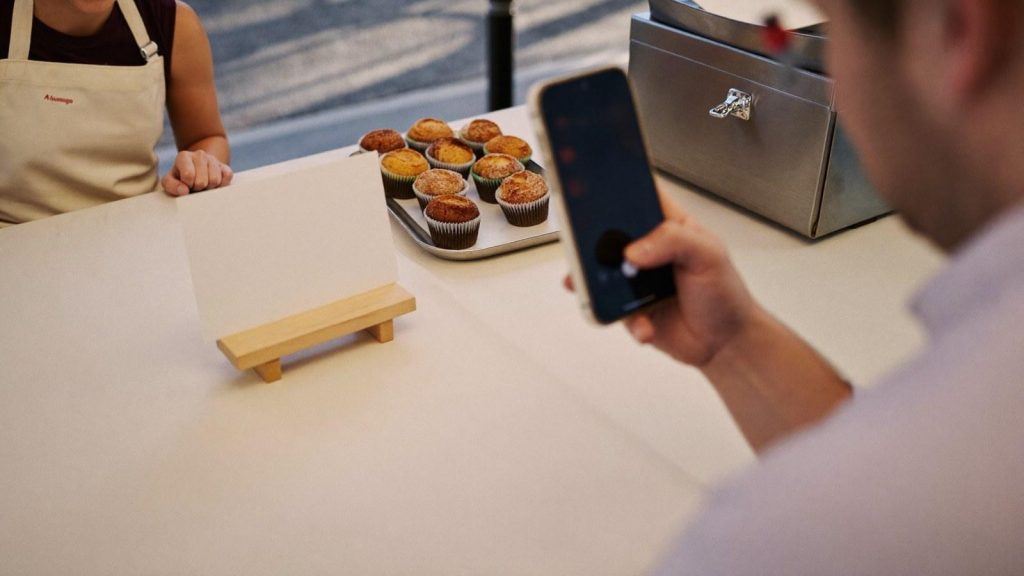
This is the single biggest lever in 2026. Half your buyers have no cash on them at all. Put a scannable code next to the cash box that points to your donation page. It takes ten seconds and it recovers sales that would have walked away. On a $600 table, adding online payment typically brings in another $250 to $350. Our page on how to collect money online covers the setup, and if you are raising for a cause rather than a group, see how to raise funds for a charity.
Add a bake off or a cake auction
A bake off doubles turnout without doubling the work. Each entrant pays a $10 registration fee, the public votes by buying $1 bites, and the winner takes a prize donated by a local business. The higher earning variant is the cake auction: ten businesses sponsor a custom cake, bidding runs on your page, and a single lot often reaches $150. It is the fastest way to reach the people who will not come in person.
How to promote your bake sale
Social media, newsletters and local groups
Three posts are enough, but they have to land at the right moment: one at announcement with the cause and the date, one three days out with a photo of the products, one on the morning of with the link to your page. Post in neighbourhood Facebook groups, send the parent newsletter and ask every volunteer to share the link inside their own network. One photo taken in daylight is worth three paragraphs of text.
Getting local businesses on board
Local businesses say yes more often than people expect, because the ask is small and visible. Ask for a supply donation, a prize for the draw, window space or a $100 sponsorship in exchange for a mention. A single company can also buy fifty boxes for its staff, which settles your target in one phone call.
Bake sale FAQ
How much money can a bake sale raise?
A one day school sale brings in $400 to $800. A shopping centre booth or a sale attached to an event runs $1,000 to $3,000. Location and foot traffic matter far more than the recipes you choose.
What should I charge for a cookie or a square?
Charge $2 for a cookie or a muffin, $3 for a brownie, a bar or a cupcake, and $10 for a bag of six. Always round to the dollar, because coins slow the line down and cost you sales.
Do you need a permit to sell baked goods in Canada?
Rules differ by province, and most exempt occasional sales run by a nonprofit or a school group. Check with your local public health unit, avoid anything that needs refrigeration and label allergens on every item.
What do you do with leftovers?
Cut prices in half for the last hour, then sell what is left in $5 mystery bags. Anything still there goes to volunteers, a community organization or school staff. Never take leftovers home unsold.
How do you collect money if nobody has cash?
Put a scannable code next to the cash box that opens your fundraising page. Buyers pay by card in ten seconds with no account to create. On a $600 table that one change typically adds another $250.
